History
 History Statement
Rockwell Green Primary School believes that History makes a valuable and distinctive contribution to pupils’ education. History is about real people who lived, and real events which happened in the past. History is concerned with sequence, time and chronology and is the study of evidence about the past; it gives us a sense of identity, set within our social, political, cultural and economic relationships. History fires the children’s curiosity about the past in Britain and the wider world and plays an essential part in preparing us for living and working in the contemporary world. Pupils consider how the past influences the present, what past societies were like, how these societies organised their politics, and what beliefs and cultures influenced people’s actions. As they do this, children develop a chronological framework for their knowledge of significant events and people. They see the diversity of human experience, and understand more about themselves as individuals and members of society. What they learn can influence their decisions about personal choices, attitudes and values. In history, children find evidence, weigh it up and reach their own conclusions.
Our curriculum ensures that core knowledge has been identified by leaders in each subject; the core knowledge is carefully sequenced into learning that builds over time on previous foundations; and teachers refer to prior knowledge and frequently check on how well children are remembering new knowledge. Our strong curriculum is built upon substantive knowledge, disciplinary knowledge and conceptual knowledge.
OUR AIMS - INTENT
The aims of History are:
- To foster curiosity and enthusiasm: Fostering a genuine passion for learning about the past and asking perceptive questions. To arouse an interest in the past and an appreciation of human achievement.
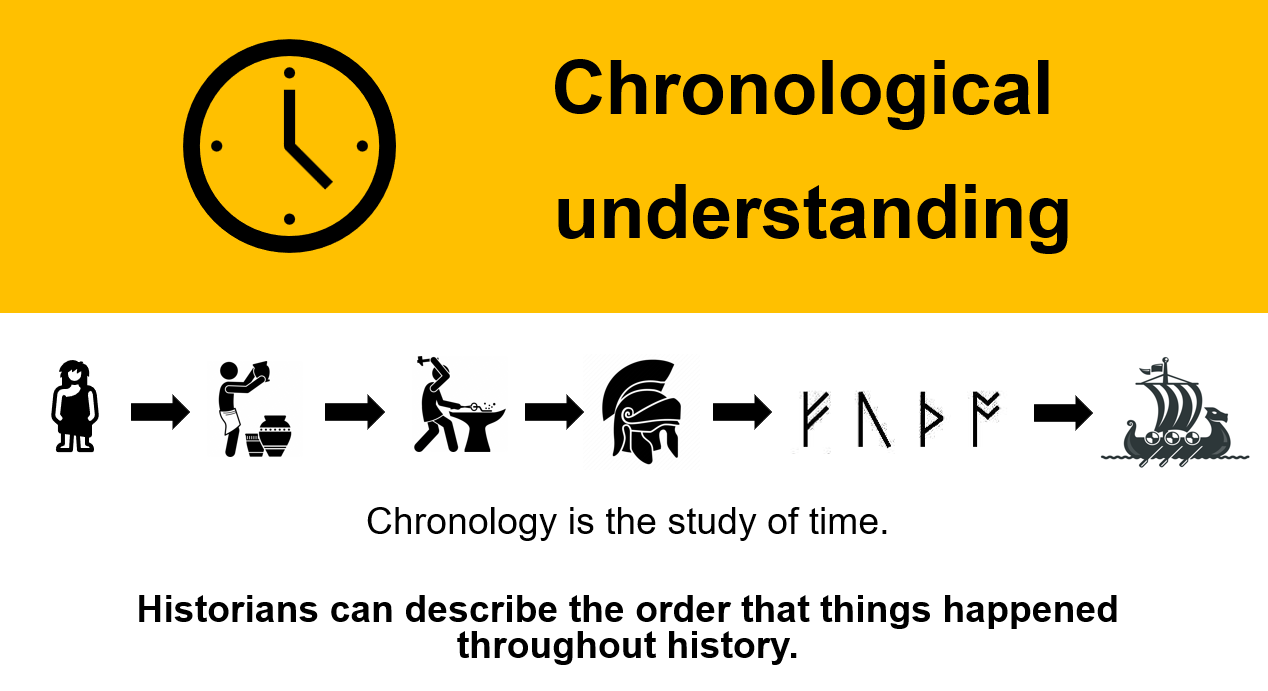
- To build chronological awareness: Building a coherent understanding of time, from ancient civilisations to modern-day history. To understand the present in the light of the past; the influence that events in the past have in shaping the present. To help pupils develop a sense of identity through learning about their family, the development of their community, Britain, Europe and the world.
- To understand local heritage: Leveraging Somerset’s rich history—such as its industrial heritage, local museums, and regional landscapes—to make history relatable.
- To encourage critical thinking: Encouraging pupils to "think like a historian" by analysing evidence, weighing arguments, and understanding diverse perspectives.To introduce pupils to the language and vocabulary of History. To develop a range of skills necessary for historical enquiry and interpretation. To give children the opportunity to actively think, as a result moving knowledge to long- term memory. To provide a strong curriculum for all which is built upon substantive knowledge, disciplinary knowledge and conceptual knowledge.
IMPLEMENTATION: TEACHING AND LEARNING
At Rockwell Green Primary School we implement the history curriculum by delivering progressive, enquiry-led lessons aligned with the National Curriculum. Our carefully planned units of work emphasis chronological understanding, critical evaluation of sources, and local history projects, frequently utilising the county's rich heritage collections. History/ Geography lessons will take place each week.
We believe children learn best when:
- Pupils experience Enquiry-Led Learning: Lessons are structured around big questions (e.g., investigating what the region was like during the Roman era) to spark curiosity and develop analytical skills.
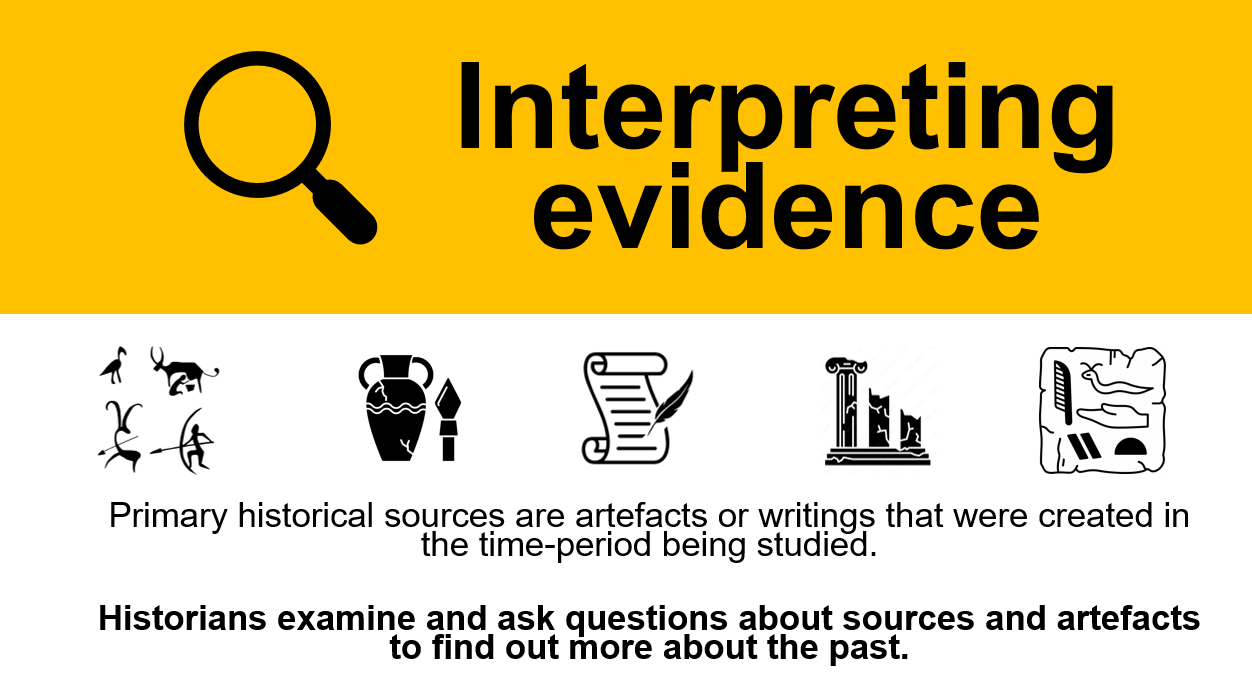
- Disciplinary knowledge is progressive and underpins each lesson: Pupils learn to think like historians and archaeologists by examining, interpreting, and evaluating different types of evidence and historical sources.
- There is a regular Local Area Focus: Learning often connects to the immediate region, helping students understand how local societies, landscapes, and communities have transformed over time.
- Lessons are sequenced progressively: Lesson sequences and resources are carefully designed to build on prior knowledge, ensuring a seamless transition of skills from Early Years to Key Stage 2 and beyond.
- Pupils are given opportunities for visits and experiences: Whenever possible, visits related to History topics are made or visitors are invited into school. Events and experiences are also organised within school that give the learning relevance and purpose eg. acting out the Christmas Truce in WW1. In addition, we subscribe to Somerset Heritage which provides both artefacts that can be used by school and visits.
EARLY YEARS
History is taught in Reception as an integral part of the topic work through child-initiated and adult led activities. The children are given the opportunity to find out about past and present events in their own lives, and those of their families and other people they know. In the Foundation stage history makes a significant contribution to developing a child’s understanding of the world through activities such as looking at pictures of famous people in history or discovering the meaning of new and old in relation to their own lives.
KEY STAGE 1
During Key Stage 1 pupils will learn about people’s lives and lifestyles. They will find out about significant men, women, children and events from the recent and more distant past, including those from both Britain and the wider world. They will listen and respond to stories and use sources of information to help them ask and answer questions. They will learn how the past is different from the present.
Pupils should develop an awareness of the past, using common words and phrases relating to the passing of time. They should know where the people and events they study fit within a chronological framework and identify similarities and differences between ways of life in different periods. They should use a wide vocabulary of everyday historical terms. They should ask and answer questions, choosing and using parts of stories and other sources to show that they know and understand key features of events. They should understand some of the ways in which we find out about the past and identify different ways in which it is represented.
KEY STAGE 2
In Key Stage 2, pupils should continue to develop a chronologically secure knowledge and understanding of British, local and world history, establishing clear narratives within and across the periods they study. They should note connections, contrasts and trends over time and develop the appropriate use of historical terms. They should regularly address and sometimes devise historically valid questions about change, cause, similarity and difference, and significance. They should construct informed responses that involve thoughtful selection and organisation of relevant historical information. They should understand how our knowledge of the past is constructed from a range of sources and that the past can be represented and interpreted in different ways. Pupils should learn to draw their own conclusions about the past, based on evidence, imagination and questioning and present their ideas in a variety of forms.
TYPES OF KNOWLEDGE – THINKING LIKE A HISTORIAN
Substantive Knowledge:
- Teachers choose 3-5 facts which can be expressed as statements or facts (propositions) per learning episode.
- This forms prior knowledge for activation during the next lesson.
- Substantive knowledge is used for assessment and consolidation purposes
Disciplinary Knowledge:
- Teachers ensure that the children know which discipline they are working within during every learning episode.
- Teachers and children to use, ‘Thinking like a Historian’ terminology and define these clearly for each discipline.
- Teachers use a progression of disciplinary knowledge to demonstrate our age- appropriate expectations.
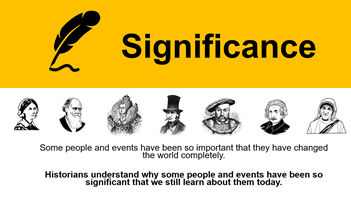
Conceptual Knowledge:
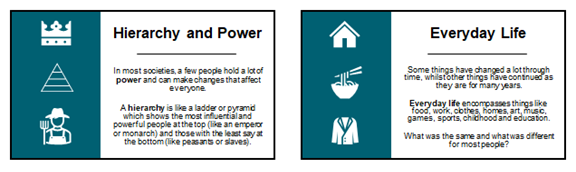
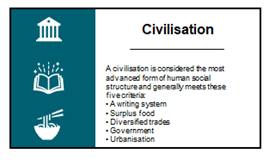
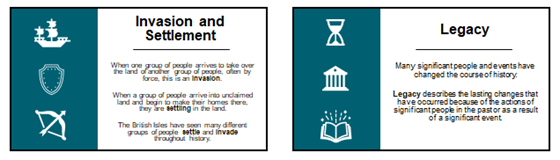
- Substantive concepts are the ‘Big Ideas’ which form across a subject.
- Our curriculum is designed to ensure that children encounter the same concepts (and their agreed definitions) multiple times across their school career.
- Children may not remember every piece of core substantive knowledge that we teach them but they should understand the concepts they’ve encountered across multiple contexts.
HISTORY CURRICULUM PLANNING
In the most part, History (and Geography) are the key drivers behind termly or half-termly topics and other areas such as English, Maths, Design & Technology and Art will be utilised as a vehicle to develop a deeper knowledge and understanding of the period being studied. History planning is informed by the content of the National Curriculum 2014. This information is developed by staff into Medium Term Plans, which is used to produce more detailed lesson plans. Topic content shows a balanced coverage based on the National Curriculum and an enquiry based approach to teaching and learning.
- Every learning episode has 3-5 pieces of core (substantive) knowledge identified and built into planning.
- Progression in learning between year groups is demonstrated through progression in the disciplinary knowledge.
- Learning activities should help children to understand how historians and archaeologists think.
- Almost every history lesson should make reference to sources and artefacts.
Planning:
Our successful sequences of learning regularly include the following elements:
1. Activate prior learning – take time to review previous learning with the children, either from the preceding lessons or from a past unit of work, so that they are able to build links between knowledge and develop their schema around the content of the coming lessons.
2. Establish new Tier 2 and Tier 3 vocabulary – explicitly teach new vocabulary at pace, modelling the pronunciation and definition of the word and providing an example of the word used in context. Use simple images to add dual coding benefits for the children.
3. Modelling and guided practice – this will take a variety of forms, but always involves the teacher as expert sharing essential knowledge for the lesson using carefully selected resources and gradually inviting the children to remember or practise alongside, as appropriate.
4. Independent practice – offer learning opportunities to remember, practise or use the new knowledge independently. Any task should be suitably challenging (aim for an 80% success rate) and offer scaffolds which allow all children to reach the same high expectations.
5.Assessment – provide simple, low-stakes assessment opportunities, such as quiz boxes for weekly quizzes.
Not every lesson needs to look the same and teachers should be free to bring their own creativity to their classrooms, but an understanding and inclusion of the above will ensure that the most ambitious learning is taking place.
ASSESSMENT AND RECORD KEEPING
At Rockwell Green primary School assessment is an integral part of the teaching process. The assessment of children’s work is on-going to ensure that understanding is being achieved and that progress is being made. Feedback is given to the children as soon as possible and will be guided by the school’s Feedback Policy.
Whole school History overview