Geography
Geography Statement
Geography is concerned with the study of places, the human and physical processes which shape them and the people who live in them. It explores the relationship between the earth and its peoples through the study of places, space and environment. Geography helps children to make sense of their surroundings and the wider world, and the interdependence of individuals, groups and nations. Learning about the world and the methods used to study sources and draw conclusions helps pupils understand and contribute to the world in which they live. It also allows then to develop effective enquiry and questioning skills.
Geography is an essential part of a balanced, broad coherent and relevant curriculum and helps to develop cultural capital. It acts as a unifying link between the humanities and physical sciences.
It is recognised that Geography is not a restrictive subject and that it appears in many forms and is cross-curricular.
Our curriculum ensures that core knowledge has been identified by leaders in each subject; the core knowledge is carefully sequenced into learning that builds over time on previous foundations; and teachers refer to prior knowledge and frequently check on how well children are remembering new knowledge. Our strong curriculum is built upon substantive knowledge, disciplinary knowledge and conceptual knowledge.
OUR AIMS - INTENT
The aims of Geography are:
- To develop Locational & Place Knowledge: Developing a strong spatial awareness of the globe, the UK, and specifically how pupils' immediate locality fits into the broader county of Somerset.
- To understand Physical & Human Processes: Understanding the dynamic interaction between Earth's physical features and human activity, including studies on climate, rivers, coasts, and local rock formations.
- To be taught and to practice Fieldwork & Enquiry: Emphasizing practical, hands-on learning outside the classroom to foster independence and analytical thinking.
- To explore Global Citizenship & Sustainability: Exploring diverse cultures, environmental challenges (such as sustainable development and climate change), and humanity’s impact on the planet.
IMPLEMENTATION: TEACHING AND LEARNING
At Rockwell Green Primary School we implement our geography curriculum by combining the National Curriculum with localized fieldwork, map skills, and enquiry-based learning. We use our local environment—such as the local parks and nearby towns—to help children understand physical and human geography while fostering global citizenship.
History/ Geography lessons will take place each week.
We believe children learn best when they experience:
- Local Fieldwork: Hands-on exploration in the school grounds, nearby parks, and surrounding ecosystems (e.g., coastal trips, water management sites).
- Progressive Skills: A spiral curriculum where key concepts like mapping, scale, and environmental sustainability are revisited and expanded upon each year.
- Global Comparisons: Contrasting the local area with regions across the globe to build cultural awareness.
- Cross-Curricular Links: Integrating high-quality texts and computing skills into geographical research.
EARLY YEARS
History is taught in Reception as an integral part of the topic work through child-initiated and adult led activities. The children are given the opportunity to find out about past and present events in their own lives, and those of their families and other people they know. In the Foundation stage history makes a significant contribution to developing a child’s understanding of the world through activities such as looking at pictures of famous people in history or discovering the meaning of new and old in relation to their own lives.
KEY STAGE 1
During Key Stage 1 pupils will learn about people’s lives and lifestyles. They will find out about significant men, women, children and events from the recent and more distant past, including those from both Britain and the wider world. They will listen and respond to stories and use sources of information to help them ask and answer questions. They will learn how the past is different from the present.
Pupils should develop an awareness of the past, using common words and phrases relating to the passing of time. They should know where the people and events they study fit within a chronological framework and identify similarities and differences between ways of life in different periods. They should use a wide vocabulary of everyday historical terms. They should ask and answer questions, choosing and using parts of stories and other sources to show that they know and understand key features of events. They should understand some of the ways in which we find out about the past and identify different ways in which it is represented.
KEY STAGE 2
In Key Stage 2, pupils should continue to develop a chronologically secure knowledge and understanding of British, local and world history, establishing clear narratives within and across the periods they study. They should note connections, contrasts and trends over time and develop the appropriate use of historical terms. They should regularly address and sometimes devise historically valid questions about change, cause, similarity and difference, and significance. They should construct informed responses that involve thoughtful selection and organisation of relevant historical information. They should understand how our knowledge of the past is constructed from a range of sources and that the past can be represented and interpreted in different ways. Pupils should learn to draw their own conclusions about the past, based on evidence, imagination and questioning and present their ideas in a variety of forms.
.
TYPES OF KNOWLEDGE- THINKING LIKE A GEOGRAPHER
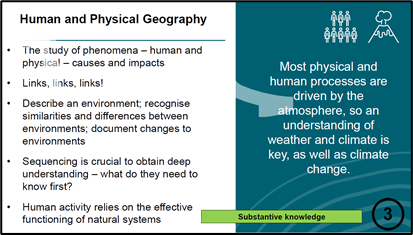
Substantive Knowledge:
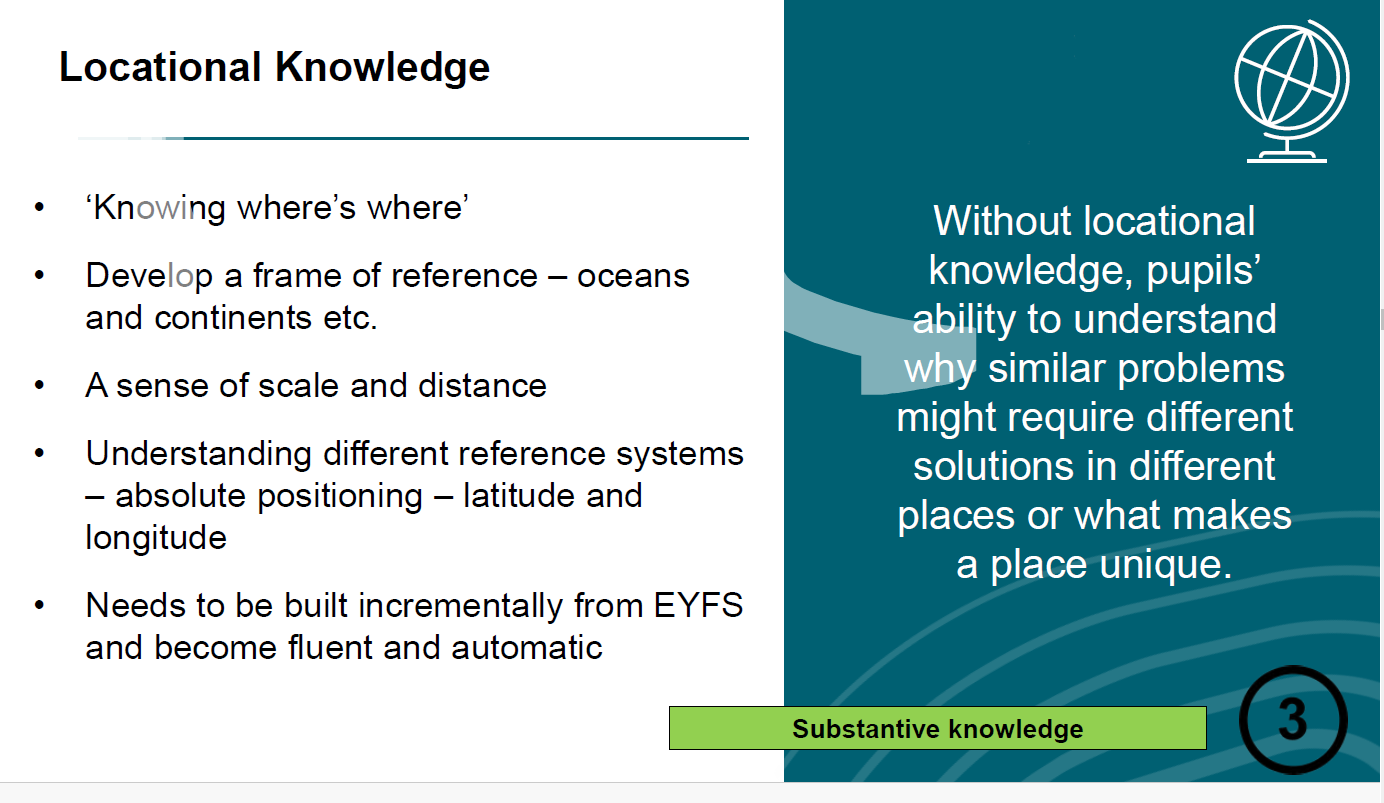
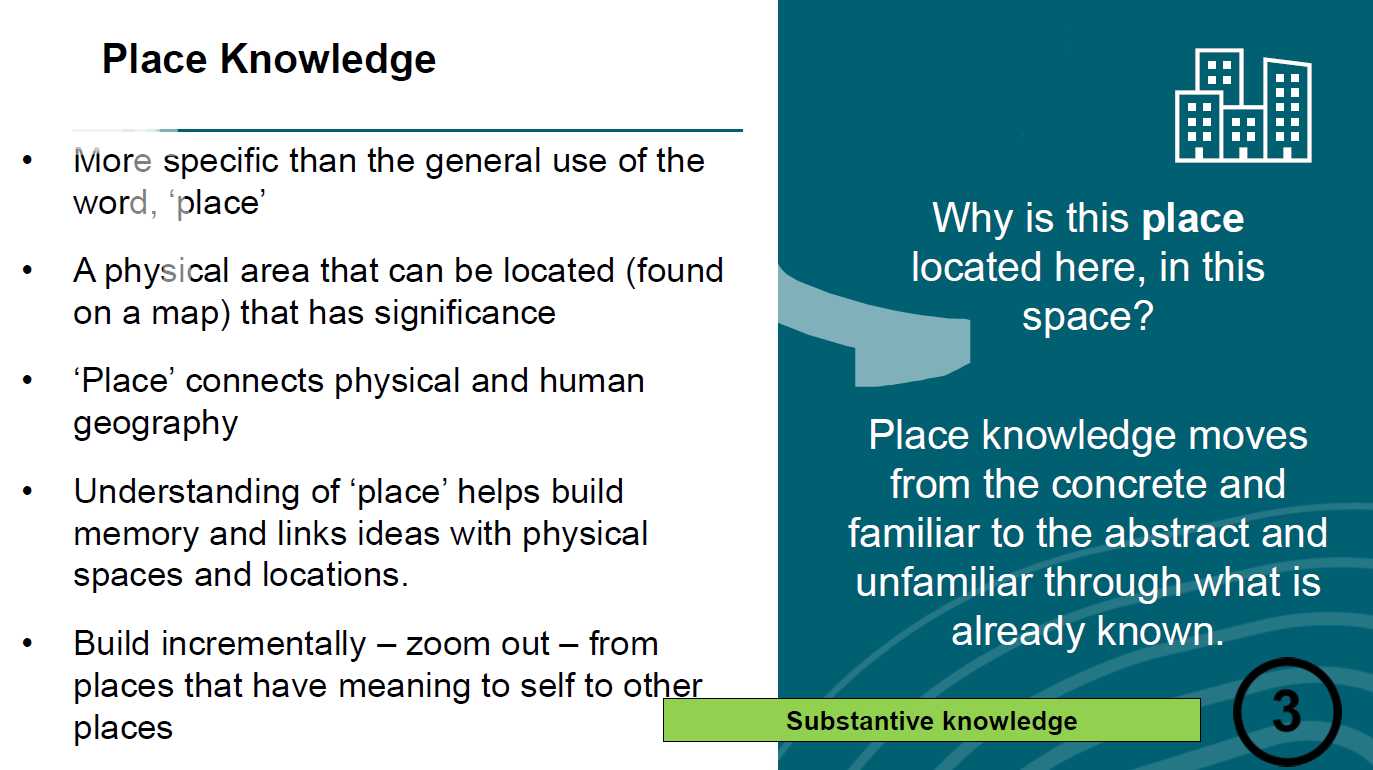
- Substantive knowledge in Geography can be broken down into: locational knowledge, place knowledge and human and physical geography.
- Teachers choose 3-5 facts which can be expressed as statements or facts (propositions) per learning episode.
- This forms prior knowledge for activation during the next lesson.
- Substantive knowledge is used for assessment and consolidation purposes
Disciplinary Knowledge:
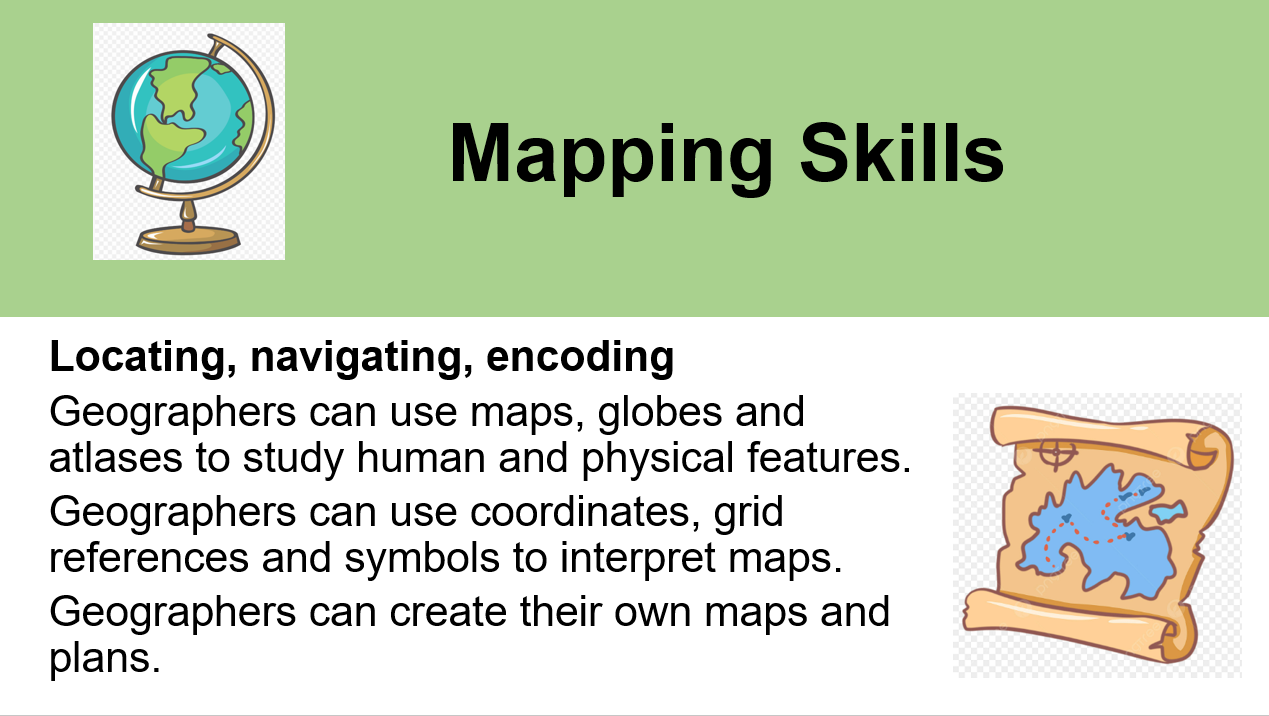
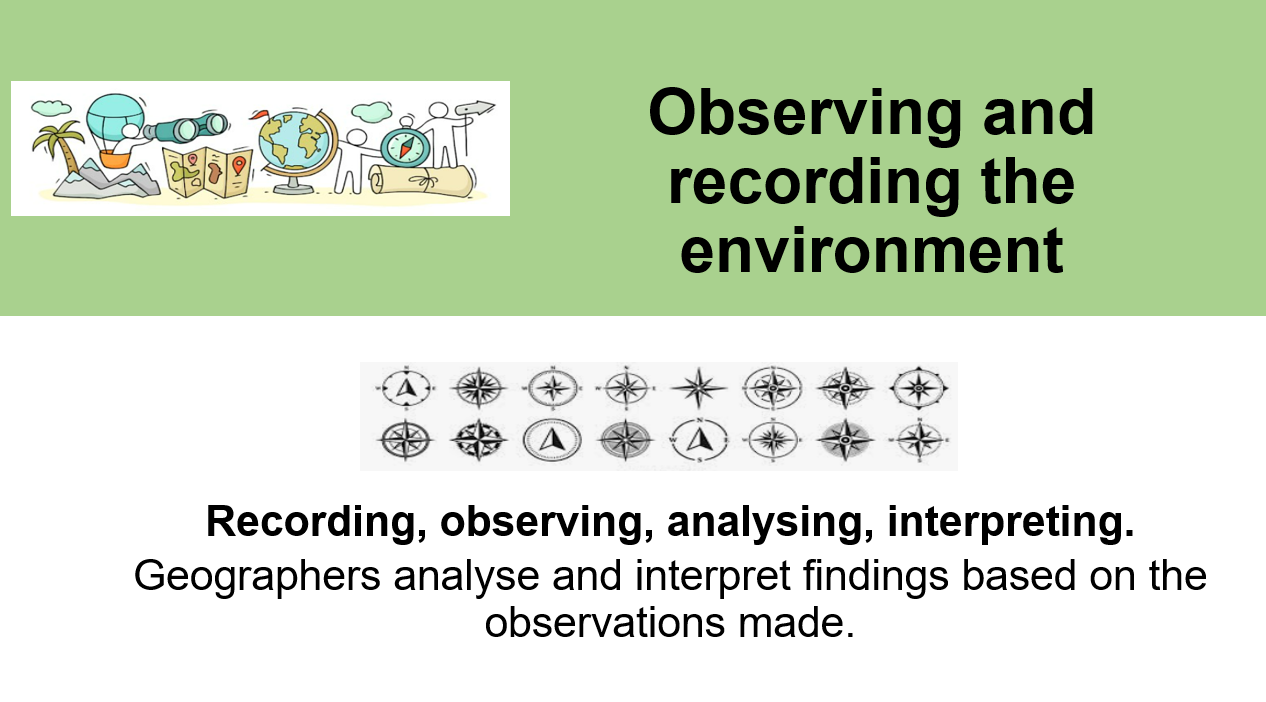
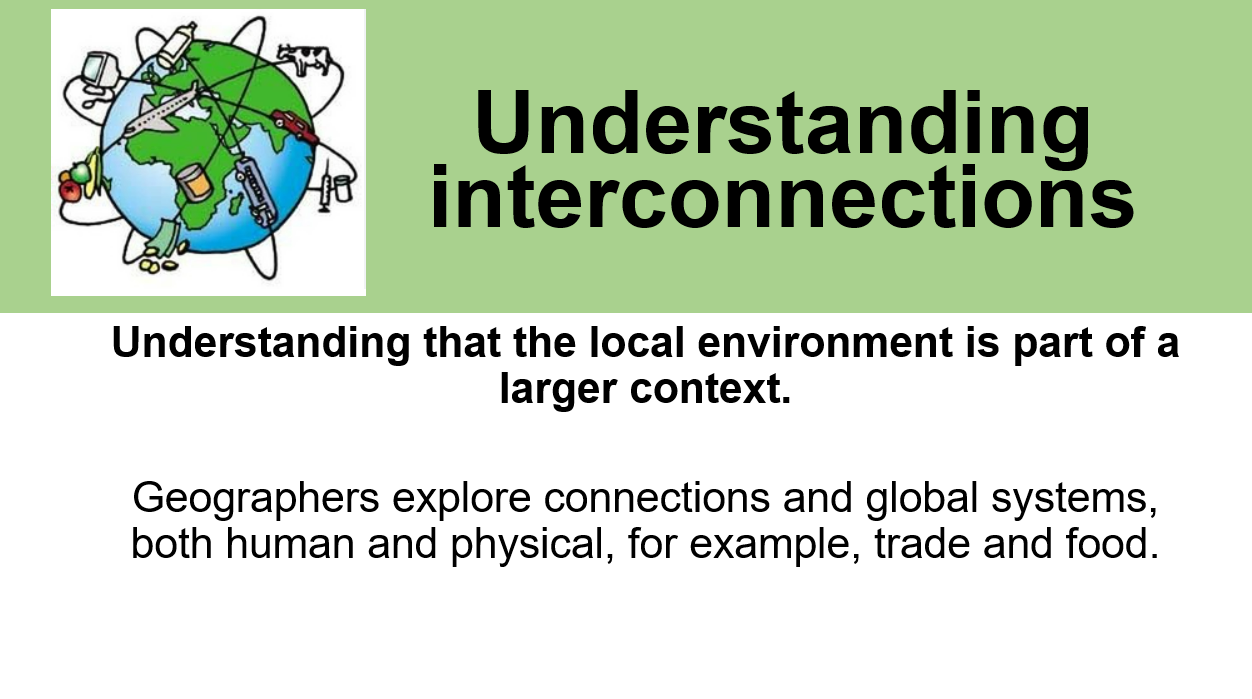
- Disciplinary knowledge in Geography can be broken down into: map skills, observing and recording the environment, understanding interconnections and asking geographical questions.
- Teachers ensure that the children know which discipline they are working within during every learning episode.
- Teachers and children to use, ‘Thinking like a Geographer’ terminology and define these clearly for each discipline.
- Teachers use a progression of disciplinary knowledge to demonstrate age- appropriate expectations.
- Fieldwork teaching and practice is vital in order to deepen understanding of geographical processes and the interplay between them.
Conceptual Knowledge:
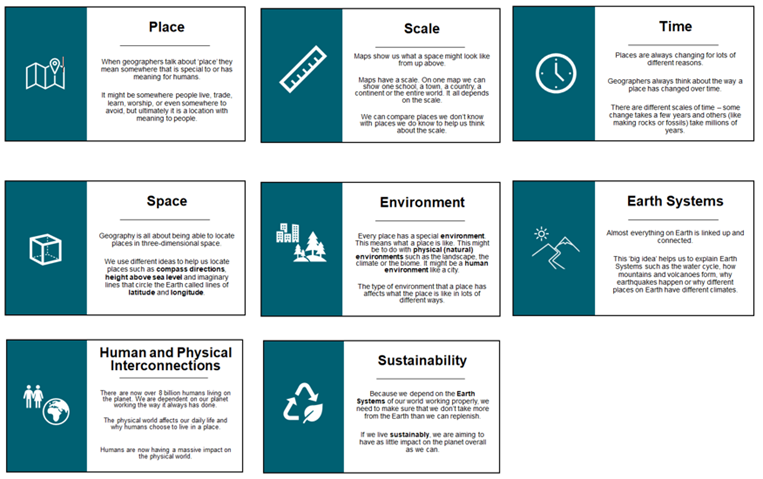
- Substantive concepts are the ‘Big Ideas’ which form across a subject.
- Our curriculum is designed to ensure that children encounter the same concepts (and their agreed definitions) multiple times across their school career.
- Children may not remember every piece of core substantive knowledge that we teach them but they should understand the concepts they’ve encountered across multiple contexts.
GEOGRAPHY CURRICULUM PLANNING
In the most part Geography (and History) are the key drivers behind termly or half-termly topics and other areas such as English, Maths, Design & Technology and Art will be utilised as a vehicle to develop a deeper knowledge and understanding of the unit being studied. Geography planning is informed by the content of the National Curriculum 2014. This information is developed by staff into Medium Term Plans, which is used to produce more detailed lesson plans. Topic content shows a balanced coverage based on the National Curriculum and an enquiry based approach to teaching and learning.
- Every learning episode has 3-5 pieces of core (substantive) knowledge identified and built into planning.
- Progression in learning between year groups is demonstrated through progression in the disciplinary knowledge.
- Learning activities should help children to understand how geographers think.
- Fieldwork teaching and practice is planned into each unit of work- children need to encounter geographical concepts first- hand, connecting classroom knowledge with the complexity of the real world.
Planning:
Our successful sequences of learning regularly include the following elements:
1. Activate prior learning – take time to review previous learning with the children, either from the preceding lessons or from a past unit of work, so that they are able to build links between knowledge and develop their schema around the content of the coming lessons.
2. Establish new Tier 2 and Tier 3 vocabulary – explicitly teach new vocabulary at pace, modelling the pronunciation and definition of the word and providing an example of the word used in context. Use simple images to add dual coding benefits for the children.
3. Modelling and guided practice – this will take a variety of forms, but always involves the teacher as expert sharing essential knowledge for the lesson using carefully selected resources and gradually inviting the children to remember or practise alongside, as appropriate.
4. Independent practice – offer learning opportunities to remember, practise or use the new knowledge independently. Any task should be suitably challenging (aim for an 80% success rate) and offer scaffolds which allow all children to reach the same high expectations.
5. Assessment – provide simple, low-stakes assessment opportunities, such as quiz boxes for weekly quizzes.
Not every lesson needs to look the same and teachers should be free to bring their own creativity to their classrooms, but an understanding and inclusion of the above will ensure that the most ambitious learning is taking place.
ASSESSMENT AND RECORD KEEPING
At Rockwell Green primary School assessment is an integral part of the teaching process. The assessment of children’s work is on-going to ensure that understanding is being achieved and that progress is being made. Feedback is given to the children as soon as possible and will be guided by the school’s Feedback Policy.